Thursday, September 15, 2005

No Longer Free, Enlightening and Frightening for Half a Decade, Alert SNS Reader Hall of Fame, Support SNS, No Telling How Long This Will Remain True

Yes, that’s right. The StratVantage News Summary is no longer free – of advertising, that is. Of course, you can still receive SNS for free, but now you’ll be seeing Google AdSense ads along with the brilliant commentary.

This reversal of a long-standing SNS policy was not an easy decision, especially considering how much I hate advertising. It was based on a need to derive some value for the amount of work I put in to each issue without charging for subscriptions. Because, as we all know, information wants to be free and, as a corollary, no one wants to pay for stuff they get from the Internet unless it’s delivered to their door by a uniformed courier of some sort.

Years ago, I did actually drop an ad into SNS, basically because I thought the ad was funny. It generated at least one comment claiming that the newsletter had been hacked.

With the advent of Google AdSense, however, advertising has become a bit more palatable. What the service does is match its ads with the content of the page you are viewing. This means the ads are likely to be pretty relevant to your interests, since you’re obviously reading the page for a reason. Plus, the ads are text and not whirling, whizzy graphics.

I must say there is one pretty draconian restriction in AdSense’s Terms and Conditions, however. I must agree not to “engage in any action or practice that reflects poorly on Google or otherwise disparages or devalues Google’s reputation or goodwill.”

I always thought Google really sucked. They are up to no good and their real motto is “Evil, 24/7.”

We’ll see how that grabs them.

But seriously, he who pays the piper calls the tune, and any site that accepts advertising faces the possibility of being influenced by the advertiser. I’ve never said anything bad about Google, and I think they’re generally a fine company, except for their Gmail Privacy Policy (specifically, “Because we keep back-up copies of data for the purposes of recovery from errors or system failure, residual copies of email may remain on our systems for some time, even after you have deleted messages from your mailbox or after the termination of your account . . . Information displayed or clicked on in your Gmail account (including UI elements, ads, links, and other information) is also recorded.”) But I reserve the right to trash them in the future, ads or no ads.

Enlightening and Frightening for Half a Decade

As SNS approaches its fifth birthday September 24th, it’s appropriate to look back across a span of time that has seen the deflation of the dotcom bubble, the acceleration of outsourcing, and the explosion of Wi-Fi along with many other rapidly-accelerating technological trends. Over the next couple of issues, I’ll be dredging up some of the more interesting nuggets from SNS and taking a look at some of the predictions, by me and by others, and how they panned out.

Five years ago, were you thinking about wireless Internet via Wi-Fi, even across whole cities? I was. The very first SNS in 2000 mentioned it, and take a look at the analysis and predictions on this front from four years ago,

Speaking of the first SNS, here are the topics covered in the inaugural issue and the current status of each:

One-Third of Business Say E-Commerce Will Transform

Yeah, e-commerce has turned out to be somewhat of a big thing.

Microsoft Enhances bCentral

bCentral morphed from the probable category killer offering a collection of hosted Web tools, email, e-commerce and marketing applications and such to what appears to be a marketing site for Microsoft. Microsoft did not dominate small business IT through bCentral as many had feared they would.

City-Wide Wireless Service Provider

Metropolitan wireless is an extremely hot topic now, both on the commercial and the free-for-all side. I started a company to exploit this trend.

New Mobile Modem Hits Download Speeds of 128 kbps

Metricom has gone bye-bye, but Ricochet, their metropolitan wireless Internet service has been sold several times, ending up with Terabeam Wireless and offering just three markets: San Diego, Denver, and Aurora, CO. If they’d had the cash, they could have dominated back in the 56Kbps era.

Out on a Limb with M-Commerce

Here’s an example of an industry analyst prediction that actually panned out. In 2000, Forrester predicted there was latent demand for Internet-enabled mobile phones. This prediction is finally coming true with Verizon’s new high speed EV-DO data network and Sprint and Cingular playing catch-up.

Shakeout Looming in B2B Communities?

Um, yes, you could say there was a slight B2B online marketplace shakeout.

1 Million Businesses on DSL in 3 Years? Sounds light to me

Well, it wasn’t. I hadn’t counted on the strong performance of cable broadband, the incredible problems of early DSL, and the stupidity of the telcos. Business DSL lines numbered only 830,000 in 2003.

Preparing for the B2B Battle

The subject of this piece, VerticalNet, has survived, but hardly as the dominant force in online B2B marketplaces it once was. It is now a provider of supply chain solutions. When I worked at Virtualfund, we considered VerticalNet our major competition. Virtualfund imploded in late 2000, although its stock is still traded, after having been hijacked by sharks. At least VerticalNet is in the same business category as it was back in the dotcom day.

Wireless Web wave breaks over the IPO market

Yes, wireless was a hot VC market, and still is an area with some signs of venture capital life these days.

The Great Thing About Standards: There are so many of them!

RSS 1.0, the standard I was talking about in this item, spawned the blogger revolution and has indeed contributed to moving us toward Web inventor Tim Berners Lee's vision for the “semantic web”: one vast database of information. See Google.

Business guru Tom Peters sees major e-commerce shakeout

I doubted Tom Peters’ credentials in B2B e-commerce after seeing him speak in May 2000. Nonetheless, I agreed with his prediction that over 85 percent of e-commerce-based companies would bite the big one. At least.

Alert SNS Reader Hall of Fame

But of course, I don’t do SNS alone. I am backed up by legions of Alert SNS Readers who contribute the interesting, bizarre and poignant infonuggets that serve as starting points for my rants. Below is the Alert SNS Reader Hall of Fame, along with what each has contributed.

Alert SNS Reader (tally)

Contribution

Roger Hamm (13)

PDA/cell phone convergence, selling bogus .usa domain names, wireless camera-in-a-capsule, Google’s uber-computer, Six Technologies That Will Change the World, Ray Kurzweil/The Jerk, Odd Todd, Young Scientist Round Table, GeekDIY, business plans of failed dotcoms, nanotube white paper, space elevator, teens wrote Goner worm

Andrew Hargreave (12)

Super DCMA laws, the “evil bit”, Acme Rent-A-Car fining $150 for speeding, Hasbro’s game, POX, Good Technology, hacking Xbox, software as a service patent, Microsoft’s dead supporters, fighting Code Red, hacked site liability, Arizona education ASP

David Dabbs (11)

Fast packet keying, implanted RFID chips, The Death of TCP/IP: Why the Age of Internet Innocence is Over, wireless LAN and Bluetooth network, DeCSS, next-bench marketing, disposable technology, wireless LAN security, PDF virus, Industry Standard demise, Hyper-Sonic Sound System

Larry Kuhn (10)

PC WAP browser, virtual keyboard, Microsoft’s SmartPhone, PC-Ephone, Valley Of the Geeks, broadband’s always-on-ness, Hitachi’s disk tutorial, Microsoft Toast, Java struggle, Microsoft Passport

Andy Stevko (5)

comments in Windows 2000 code, server admins fighting back, Code Reuse embarrassment, Burning Man survivor report, Microsoft security advisory parody

Nick Stanley (4)

Go FoneBlog™, broadband in the hinterland, Fiber To The Home, Solving the Broadband Paradox

Todd Mortenson (4)

BuzzWhack, Subservient Chicken, Wi-Fi players list, sports as broadband killer app

Bill Lehnertz (4)

Cat in peril, nano applications, nanowhizz, nano frankenfood

Tim Plas (3)

Wal-Mart’s RFID move, SeaCode, outsourcing to Native Americans

John Gehring (3)

Nanotechnology Research and Development Act of 2003 (NeRD), Scan Based Trading, VenueMaitred, patents

Mike Todey (3)

Laser-read databases, IBM’s hard disk storage technology, Millipede

Jeff Ellsworth (3)

“There are more things out there; therefore more things can be conceived.” Wiretap Authority, PGP in 9/11 planning

Dr. Andrew Odlyzko (2)

Content is Not King, Privacy, Economics, and Price Discrimination on the Internet

John Skach (2)

Voice interfaces, position sensing and Big Brother

Dean Cowdery (2)

The Shredder, Darwin Magazine

Jacob Jaffe (2)

Microsoft Strategic Technology Protection Program, Smart Tags

Ken Florian (2)

Qurb, ‘Newfies’

Peter Ellsworth

iPods at Duke

Pete Simpson

Wallflower Plus wireless picture frame

Jacqueline Miller

Your House is Smarter Than a Vintage Bug

Eric Strauss

Cell phone pix

Valerie Janda

the ultimate car hack

Doug Laney

ACLU privacy piece

Steve Harr

Bandwidth priced like energy

Marv Vikla

Downside of offshoring

Bob Burkhart

VisualRoute

Dave Harkins

BzzCard

Deb Ellsworth

POX game platform

Nick Caffarra

Registered sex offenders online

Claudia Swan

US behind in wireless

Robert Koerner

Alert SNS Reader secret handshake

I’d like to thank all the Alert SNS Readers for keeping me on my toes!

Want to get on this list? Send your infonuggets along and who knows? Immortality might be yours.

Support SNS

So one era ends, another begins. SNS will continue to clutter your inbox for as long as you care to subscribe. But if you’d like to tip your server, either click on the ads to the right (which you may not see if you're reading this in your email), or use the Support SNS button also on the right. Another thing you can do is forward each issue of SNS to everyone you know and encourage them to subscribe, for free.

See you next issue.

Briefly Noted

  • Shameless Self-Promotion Dept.: It’s here: A wireless networking company called The WiMAX Guys. Our main business is new installs for people who want to set up wireless hotspots such as hotels, warehouses, apartment buildings, and office buildings or hotzones that cover cities. We also sell a knowledge-based Web portal called the MAX K-Base. Check out our main Website at www.TheWiMAXGuys.com. My wife created a bit of a stir when her op-ed piece was published in the Minneapolis StarTribune newspaper after the election. Her article, “Two Nations, Handcuffed Together,” has been commented on or linked to by more than 85 Websites. She’s now created a Website to capitalize on her newfound pundit status. Check it out at www.debellsworth.com. Several issues ago I debuted SNS Begware, an opportunity for you, gentle reader, to express your appreciation by tipping your server via PayPal. See the sidebar for more info. Total in the kitty so far: $91.48. Thanks Dave!
  • The Raw File – SNS is dedicated to delivering the scoop on the latest and greatest. However, I collect lots of information that never makes it into the newsletter before it gets old. I’ve collected all this aging info into a page called The Raw File. This page is the raw information I gather for SNS articles. It’s not pretty, and some may be a little incoherent, but chances are there are still things in TRF that might be news to you. So therefore, use The Raw File at your own risk – it’s 45+ pages of the best stuff that didn’t make it into SNS. The Raw File
  • No Telling How Long This Will Remain True: But if you perform the following steps, you’ll be taken to a surprising Website. 1.) Go to www.google.com 2.) Type in the single word: failure 3.) Press the I'm feeling lucky button (instead of the Google search one) 4.) Figure out how it was done and email me. Thanks to Alert SNS Reader Seth Freeman for the pointer.
  • If You’ve Made it This Far: Well, there still has been only one entrant in our contest: Alert SNS Reader Todd Mortenson. You may recall the contest was to email me the retort to the partial music lyric buried somewhere in the previous newsletter. The prize was one stick of totally obsolete PC memory. The answer was: “And I said yes sir brother sheriff, and that's your wife on the back of my horse.” So the memory has remained unclaimed. I’ll award it to the first person who emails me the name of that song (so easy!), the partial lyric I was referring to, and who also answers the tiebreaker from last issue: Who is Hoops McCann? Twice. Good luck!

Thursday, September 01, 2005

Bits & Pieces Again

I need to do a little end of summer house cleaning, so here are a bunch of interesting tidbits that have been gathering dust here at StratVantage Central.

  • Stop the Credit Card Madness: If you’re like me, you get several credit card offers a week, or perhaps a day. I hope you’re shredding the applications forms, because these persistent annoyances are a great source of identity theft. If you’d like to stop getting these offers, for either five years or forever, you can opt out online. Doing so removes your name from the lists at the four largest credit bureaus, but may not stop all offers from coming. (So who wants to only stop getting them for five years?) OptOutPreScreen.com
  • Cell Phone Do Not Call List Hoax: I’ve railed before about how you should be suspicious of any email that encourages you to forward it to all your friends. I got one recently that was only partly false. It said, in part, “In 31 days, cell phone numbers are being released to telemarketing companies and you will start to receive sales calls.” It goes on to urge you to place your cell phone number on a national do not call list. Turns out the list is real, but the urgency is not. According to the Netlore Archive, “it's true that the major wireless phone providers (except Verizon) have announced their intention to establish a 411 directory of customers' cell phone numbers beginning in 2006, it is not true that they plan to ‘publish’ said directory for any and all to read.” It’s also true that you can put any number on the Federal Trade Commission do not call list to avoid solicitations. Do Not Call List
  • Don’t Answer the Boss’ Email: A new kind of hoax email technique is on the rise. You may be familiar with phishing, or emails pretending to be from eBay or a bank that ask you to go to a Website and re-enter your personal information. Well, many people have caught on to this scam and so now a new technique called spear phishing (just because it sounds cool, I guess) substitutes your boss as the person asking you to give personal information. Email security company MessageLabs said in June that it has seen the tactic grow steadily during the year to the point where it now sees one to two spear phishing campaigns a week. So, whom do you trust? eWeek
  • You’re Famous! If you’ve ever been mentioned on a Web page, chances are a company called ZoomInfo has created a summary of information about you. I stumbled onto this service recently and was amazed at what they knew about me. When I first searched for my name, I found six or seven different summaries gleaned from former employer Websites and other sources. ZoomInfo allowed me to gather these together and edit them into a pretty neat summary of where I’ve been and what I’ve done. I’ve no idea what ZoomInfo’s business model is, other than getting click-through revenue from the Google Ads they run, but it’s a nice alternative to Googling that potential business associate. ZoomInfo
  • Verizon Expands Broadband Wireless: My company is called The WiMAX Guys, and we named ourselves that because we thought WiMAX was going to be the next big thing in wireless. In the two years since we changed our name (from The Wi-Fi Guys for reasons that make a long sad story), though, I’ve come to believe that the cell phone companies are eventually going to own wireless broadband. The reason? A technology called EV-DO and its successor, EV-DV. EV-DO is a wireless broadband technique that can give you up to 600Kbps Internet access anywhere you can get cell phone coverage. Verizon recently announce several more cities that are covered, and their BroadbandAccess service has finally come to the hinterland of Minnesota. At $80 a month for unlimited data, it’s not too economical, but the company just reduced the price to $60/month for subscribers that also have their voice service. The real-world speeds this service provides are pretty close to low-end broadband, and I think many people may give up their DSL and go wireless. But what’s even more exciting is the coming EV-DV service, which promises real-world speeds of 1Mbps! Although WiMAX promises higher data rates, achieving the kind of coverage the big cell companies can provide will be a significant challenge. It’s very likely that the Verizons and Sprints of the world will own the home broadband market once EV-DV becomes available. So perhaps we should change our name to The EV-DV Guys and become Verizon resellers. Verizon
  • Plenty of IT jobs: For several years now, I’ve been hearing about the coming shortage of IT workers. The graying of America, and especially the graying of federal IT workers, combined with the decline in the number of college students opting for a degree in Computer Science, is likely to result in a severe shortage of geeks. Well, I say, bring it on! It’s about time consulting rates got better. Alert SNS Reader Tim Plas sent along a link to a blog that discusses this trend as well as a trend toward outsourcing to Native Americans. MN Headhunter
  • Production Nanotubes: Nanotechnology, the science of creating things at a molecular level, holds great promise, as I’ve previously discussed. However, it may be evolving quicker than expected, since a joint effort between the University of Texas and Australia’s Commonwealth Scientific and Industrial Research Organization is cranking out industrial-ready material made of nanotubes at the rate of 47 feet per minute. Nanotubes are carbon rings arranged as a tube and are 2 millionths-of-an-inch (2000 times thinner than paper) wide. The coolest thing about them is they are 100 times stronger than steel at one-sixth the weight. They also conduct electricity and emit light when heated. Recently, Motorola showed a working prototype of a nanotech computer monitor. The monitor uses an array of nanotubes to fire electrons at a conventional screen. But since nanotubes can be made to glow, it’s not such a huge leap to a super-thin monitor made of glass coated with nanotubes. Best Syndication
  • Indications of the Decline of Western Civilization: Sometimes I just want to throw up my hands in disgust. Are my fellow humans endowed with any wits at all? Not only do spam and phishing and email hoaxes work on an alarming percentage of the public, but even things that are obviously jokes, like the notion of a spray that can improve the speed of your Wi-Fi connection, get legs. The idea of the Wi-Fi Speed Spray started out as a really obvious joke on John Walkenbach’s Website. Before he knew it, though, some idiot had copied his site and put Wi-Fi Speed Spray up for bid on eBay. After being asked to stop by Walkenbach, and having been thrown off eBay by the Auction Police, the miscreant, erstwhile comedian Ari Burton, duped Walkenbach’s page on his own Website. When Walkenbach complained, Burton registered the domain wifispeedspray.com, rewrote some of Walkenbach’s copy, and started selling the product as the “ultimate gag / joke gift for the computer geek who has everything.” It’s like a mini-opera! Ari Burton
  • Track Sex Offenders Online: Alert SNS Reader Nick Caffarra directed me to the New Jersey Sex Offender Internet Registry, one of many states’ efforts to identify sex offenders online (TX, CA, UT, MN). Nick was upset that there was a sex offender living in his vicinity. I say it could be worse. He could live in Bergen County, NJ. But what strikes me about these offenders is how ordinary most them appear. Kind of reminds me of a brief bit I did in a previous SNS on the game Coder or Cannibal? New Jersey Sex Offender Internet Registry
  • Hold On a Sec . . . I Gotta Go Make . . . Some Electricity: How are you going to power all your cool nanotech devices? Whizz on ‘em! Thanks to Alert SNS Reader Bill Lehnertz for answering the call. LiveScience
  • Palm a Turncoat? The rumor is that the next Palm Treo smartphone will be based on, gasp, Microsoft’s Pocket PC operating system! Could it possibly be? Maybe, maybe not. But everyone thinks Palm’s working on a Cobalt-based Treo. The whole discussion is just more reason to not believe everything you see in a Photoshop world. Engadget
  • Nano for Power: Nanotechnology will affect every area of our lives. Here’s an article on how it will affect the energy industry. Extreme Nano
  • US Eclipsed by Third World on Wireless: Alert SNS Reader Claudia Swan sent along one of the countless articles I’ve seen recently about the fact that the US is 16th in the world in wireless telephony. Written by New York Times columnist Thomas Friedman, the article is an “archive” article, according to the Times, and thus you must pay to see it. Or read it on a Third World Website, below. The Gray Lady The Indian Express
  • Spamming Anti-Spammer: Spam is spam, no matter how noble your intentions. Anti-spam vigilante SPAMIS, or the Strategic Partnership Against Microsoft Illegal Spam, sends out lots of spam calling for a boycott of all Microsoft products because Microsoft is spamming. Do as I say, not as I do. Boycott Watch
  • Here Come Nano Frankenfoods: Despite a bogus claim of healthful nanowater from a Chinese company, nanofood is currently a several billion dollar industry and is expected to grow to $20 billion by 2010. Thanks to Alert SNS Reader Bill Lehnertz for the ping. Alternet
  • Nano Hydrogen for Power: If I had a nickel for every time a cynical techie told me that we can never have a hydrogen-based economy because it takes more energy to produce hydrogen than it stores, I’d have, well, maybe 30 cents. This is in-the-box thinking, folks, and it usually ends with an assertion that only nuclear power can make energy cheaply enough to make hydrogen economical. Remember way back in high school chemistry when you learned about catalysts, the compounds that dramatically reduce the energy needed for a reaction? Well nanocompany Signa has developed a nanocatalyst for hydrogen production from water. It’s not as cool as cold fusion, but if it’s real, problem solved. News.com
  • Flogging Vlogs: OK, like Custer, it is difficult for me to admit an error. A couple years ago, I gave video blogging a “Naw, I don’t think so.” Erm, it’s actually a pretty big deal, thanks to the video cameras being built into modern phones. It has even given rise to a Jackass-wannabe called Ian, who will take your emailed challenges and perform them in front of his video camera. Enjoy your 15 minutes, Ian! Wired News

Monday, July 18, 2005

Bits & Pieces A lot of interesting tidbits have been accumulating here at StratVantage Central, so without further ado, or lengthy blather, here they are.
  • Human TV: We’re used to Asia setting electronic trends, but it’s usually Japan, not China. At a recent property fair in China, models carried LCD monitors on their backs all around the show floor showing real estate videos. Hmmm, women as furniture – leading edge thinking from a progressive nation. Gives new meaning to 36-24-36! News.com
  • Real Personal Radio: OK, it’s hard to believe a major corporation – General Motors, no less – is behind this idea. The auto giant backed a Carnegie Mellon University Human-Computer Interaction Institute Masters Program project called Roadcasting. It’s actually a great idea. Not only can you store your music playlists and MP3s on your (GM) car’s hard disk, you can also broadcast your tunes to surrounding vehicles. If you get bored with your own tunes, the system uses collaborative filtering, 802.11g Wi-Fi, and mesh networking to find other Roadcasting “stations” in range that have the tunage you like. The truly stunning thing is the range: 50km! Even more stunning is the fact that the code is Open Source! So what about copyrights? Well, the project leaders say they expect if there was commercial use of Roadcasting, performance fees would be paid through organizations like BMI. Yeah, I expect so. Don’t look for this tech in next year’s vehicles, though. The developers envision a rollout at decade’s end. Call me a cynic, but I predict rolling, thunderous convoys of beatboy, lowrider thumpers, all chilling to the same bass-heavy gangsta tune, terrorizing suburban shopping mall parking lots. Technology Review Roadcasting
  • Dated Metaphor Alert: Remember back when people were clueless about what the Internet was and could mean? Remember how techies adopted the “Information Superhighway” metaphor to try to get the point across? Well, you don’t hear much about info highways anymore. So that’s why the title of an interesting report by The Institute for Local Self-Reliance strikes the ear a bit odd. Called “Who will own Minnesota's information highways?” the report bemoans the fact that the US has fallen way behind other countries, including many developing countries in Asia, in the availability of broadband Internet. The report analyzes 10 community-owned networks in and around Minnesota. The state was a pioneer in broadband, creating MNet in 1989 to provide videoconferencing over leased lines to state and local governments, public and private universities, and public schools. The report further takes on the thorny issue of metropolitan broadband networks and whether governments or private companies should own them. New Rules
  • Get the Internet Picture: Ceiva is an interesting product: a picture frame that downloads and displays photos from the Internet. This is certainly not a device you want to put on random play! Actually, you and your friends and family sign up for the service and they can send you pix on a regular basis. It’s a pretty neat idea, but one that’s been around for a few years without taking the world by storm. I wrote about a wireless version in a previous SNS almost two years ago. Ceiva (ya know, like in rah-ceiva?)
  • Really Big Monopoly:Are the shoe and car tokens in your Monopoly game just too boringly small? If you live in London, you can play the game with full size game pieces – or could, sometime in June. The game was sponsored by ad agency Tribal DDB, who has about the most annoying Website I’ve seen in a really long time. Just try to find anything about the game on it. I dare you! Using GPS receivers, apparently participants were to motor around the real city, fake-buying properties and such. Cool idea. Really bad approach, PR-wise. The Londonist
  • A Raid on a Really Big Monopoly:You gotta hand it to the EU. Not only is it more serious about privacy than the US, but it also really doesn’t like near-monopolies abusing their power. Witness the dawn raid of several Intel offices in Europe by European antitrust regulators. Don’t hold your breath for this to happen in Redmond. Silicon.com
  • They Doth Protest Too Much: I remember as a child, my mom would often chide me when I vigorously denied having done some heinous thing: “Got a guilty conscience?” Well, RFID manufacturers and their minions are responding the same way regarding the privacy-invading possibilities of the technology. You may know RFID is the practice of putting small tags on things and then reading information, usually an identifying number, off the tag at a distance with a reader. There’s a group called CASPIAN that’s pretty concerned that this sort of thing could get out of hand if it graduates from involving pallets of stuff destined for Wal-Mart to involving individual items that we buy, like clothes and razors. So a CASPIAN sympathizer got press credentials to go to an RFID convention and took pictures of item-level RFID tags. Gillette and other RFID backers, in deference to CASPIAN and others’ concerns about privacy, have said they have no plans for item-level RFIDs. So why did the conference organizers get all medieval on the reporter and insist she not publish the photos? Read her site and decide for yourself. Spychips Spychips pix
  • Microsoft Asks Crackers for Help:Well, the turtle seems to be coming out of its shell, recognizing a changed world outside, and asking for help. In March, Microsoft held a two-day gathering of outsiders and in a stunning change of approach, opened the kimono and asked them to exploit flaws in Microsoft computing systems. TechRepublic’s members are divided on whether this is a good idea or not. Note that, in a somewhat quixotic attempt to draw a distinction, I don’t use the term “hackers” for people who break into systems. They are properly crackers, or, let’s face it, criminals. Hackers are people who find imaginative solutions to computer problems. Nuff said. TechRepublic.
  • Tivo Anywhere: Yeah, if you really need to see that Will & Grace re-run while at work waiting for your code to compile, then you can get a Slingbox and stream it over the Net. PC Magazine
  • Google – It’s Bigger Than All of Us: And now it has pictures of all of us. Well, at least it has pictures of everywhere we live. The company bought satellite imaging company Keyhole and now offers a free service called Earth 3.0 that lets you see images of anywhere on Earth, including 3D renderings of about 40 American cities. Not to be bested, Microsoft has announced MSN Virtual Earth. It remains to be seen how well the two services compare, but you can use some of Google’s technology without downloading the 10MB client simply by using their Google Maps search engine. Here’s where I live. PC Magazine
  • Quantum Crypto Gets Practical: I’ve written before about an exciting security technology called quantum cryptography. Basically, it allows for tamper-proof networks. If a cracker so much as disturbs a single photon on a fiber optic line, the network will know it. A researcher from Internet pioneer BBN BBN Technologies is building the world's first continuously operating quantum cryptography network, a 12-mile 10-node glass loop under the streets of Boston and Cambridge. Network World
  • Money for Old Magazines:My wife gets after me because I am saving the first two years of Wired magazine for posterity. Well, I’ll get the last laugh, I just know it, because Intel has paid a guy $10,000 for a 1965 copy of Electronics Magazine that featured and article that formed the basis of Intel co-founder Gordon Moore's famous Law. The bidding for my Wireds starts at $5,000. I’m not greedy. News.com
  • Advertising in Your Face: Ever looked at the “chrome” of your browser – all those bits at the top and sides of your browser that are not Webpages – and thought, “Gee, I’d really prefer to be seeing a McDonald’s ad instead of this useless stuff?” Well, you’re in luck. Ooqa-ooqa™ by United Virtualities animates the chrome with wonderfully entertaining and enlighting advertising! The company says Ooqa-ooqa “adds up to 20% more PRIME inventory to leverage the advertising offer, as well as a whole new way of engaging users all while never blocking content.” The image above is my IE browser on Ooqa-ooqa. Any questions? United Virtualities
  • Now That’s Advertising! If you hate spam (and who the heck could like it?) you’ll enjoy this Matrix-esque advert for a technology called CaseKeys. Enter the Spaminatrix. Ubergeek
  • Random Bonus Bit: Apropos of Nothing – Have you ever wondered what the pompitous of love is? And how to spell it (certainly not pompatous!)? Only a true Stevie “Guitar” Miller fan, in a very deep voice, would know. The Straight Dope

Tuesday, July 05, 2005

Just a Random Hoax

Did you know that Bill Gates:

  • Will give you lots of money if you forward an email to test Microsoft’s email tracking program?
  • Once posed for Tiger Beat magazine?
  • Will team up with AOL and do a survey with NASA, whose astronauts will collect prayers from school children all over America and take them up to space so that the angels can hear them better, all to help a little boy whose body is a burlap bag filled with leaves?
  • Authored a list of 'Rules Kids Won't Learn in School?'
  • Said, “If GM had kept up with the technology like the computer industry has, we would all be driving $25 cars that got 1,000 miles to the gallon?”
  • Pay off a couple’s mortgage for helping him change a flat tire?
The answer to all these questions is, of course, no.

Yet each of these silly assertions has been circulating on the Internet for years. In fact, the first hoax, about forwarding an email, began in 1997 and still is in the top ten hoaxes the wonderful Urban Legend Reference Pages site receives queries for on a daily basis.

Yet most of these hoaxes strain credulity. I mean, really, a body made of a bag full of leaves? Angels can hear prayers better in space? And most of the people who forward hoaxes can vote? It’s enough to shake your faith in humanity.

But the typical hoax preys on the core goodness that dwells inside most humans. Who wouldn’t want to help a sick kid, or believe that uber-billionaire Bill Gates might drop thousands – the equivalent of nickels – on good Samaritans?

The motivation for other hoaxes, however, can be more varied. I’ve written before about the Britney Spears hoax that linked to a fake CNN Webpage – that page was just clever, but could have contained dangerous code. It was created as a satirical joke by a cartoonist to make a point about misinformation.

I also wrote about another hoax that claimed that the Australian army modified a video game to use in training troops, but forgot to take out a critical piece, resulting in kangaroos taking up arms against the virtual troops.

One of the things that hoaxes require to flourish is the essential laziness of human beings. Rather than take a minute and run a Google search on the hoax subject, people are much more likely to hit the forward button and send it to everyone they know. This next hoax is a good example of this.

WIN $100000...IF YOU ANSWER....

Open Microsoft Word and type:

=rand (200,99)

and then HIT ENTER

This is something pretty cool..!

Worth a check..! try it..!

At Microsoft the whole team couldn't answer why this is happened and they added a prize of $100,000 to the person who could answer this...

Try it out yourself...

Bill Gates still doesn't know why it happens, it was discovered by a Brazilian. Just test it...

Go ahead and try it. You’ll see that the document fills up with the quick brown fox doggerel. Pretty interesting, huh?

Well plug “=rand(200,99)” into Google and follow any of the top five links. You’ll discover that the rand function is a real, but poorly documented, feature of MS Word that allows you to quickly slam in a bunch of test text so you can check the formatting of the document.

The Microsoft Knowledge Base article How to insert sample text into a document in Word explains the use and syntax of the function. There’s even a similar function in Excel that stuffs random numbers into a spreadsheet. Bill Gates is not baffled by these simple functions, and there is no reward for figuring out what’s going on.

In poking around Google researching the function, however, I ran into another interesting tidbit of information.

If you’ve worked with print or Web designers, you may be familiar with the sample text they use to demonstrate a layout. Rather than use real words, which could distract the reader from assessing the layout, designers use text similar to the following:

Lorem ipsum dolor sit amet, consectetuer adipiscing elit, sed diam nonummy nibh euismod tincidunt ut laoreet dolore magna aliquam erat volutpat. Ut wisi enim ad minim veniam, quis nostrud exerci tation ullamcorper suscipit lobortis nisl ut aliquip ex ea commodo consequat.

For some unknown reason, this is called Greeking, despite the fact that the text is almost, but not quite, Latin. As discussed at The Free Online Dictionary of Computing, “The point of using this text, or some other text of incidental intelligibility, is that it has a more-or-less normal (for English and Latin, at least) distribution of ascenders, descenders, and word lengths, as opposed to just using ‘abc 123 abc 123’, ‘Content here content here’, or the like.” There’s much more at the Lipsum site. Don’t you just love the randomness of the Net?

Hoaxes Can Have Real Consequences

There are many reasons why people perpetuate hoaxes – generosity, empathy, the love of puncturing self-important egos, and the desire to share interesting inside information. Yet all these admirable motives not only contribute to significant misinformation being perpetuated, but real-world consequences like the deluge of mail that Craig Shergold’s family got due to the “send a business card” hoax.

Like many hoaxes, this one started with a grain of truth, and in fact predates the general use of the Internet. Young Craig was diagnosed with cancer and in 1989 made a request that people help him enter the Guinness Book of World Records by sending him business cards. By 1990, more than 16 million cards had arrived and he was in the book.

But the cards didn’t stop, and once the Net got a hold of the meme years later, all hell broke loose. Because the hoax mutated, one of the addresses given for the English Shergold was in Atlanta, the Children's Wish Foundation International. According to the Urban Legend Reference Pages, “The foundation had to relocate because of all the unwanted Shergold mail. The U.S. Postal Service in Atlanta holds the hoax mailings (now more than 100 million) for a required length of time and, after they remain unclaimed, releases them to an Atlanta paper recycler.”

The moral of the story is: If you get mail that asks you to forward it to everyone you know, don’t. Check the email out at the Urban Legend Reference Pages or by simply doing a Google search. If it does check out, though, think twice about forwarding it to everyone you know. There’s enough spam in the world as it is.

Urban Legend Reference Pages

About.com

Warphead

Briefly Noted

  • Shameless Self-Promotion Dept.: It’s here: A wireless networking company called The WiMAX Guys. Our main business is new installs for people who want to set up wireless hotspots such as hotels, warehouses, apartment buildings, and office buildings or hotzones that cover cities. We also sell a knowledge-based Web portal called the MAX K-Base. Check out our main Website at www.TheWiMAXGuys.com. My wife created a bit of a stir when her op-ed piece was published in the Minneapolis StarTribune newspaper after the election. Her article, “Two Nations, Handcuffed Together,” has been commented on or linked to by more than 85 Websites. She’s now created a Website to capitalize on her newfound pundit status. Check it out at www.debellsworth.com. Coming At Some Point: A new eBook, Be On the Wave Or Under It™ will collect the best of SNS’ insights over the last couple of years, along with additional material from CTOMentor white papers and new material. It will make a great gift for associates and friends in need of a guide to the latest and greatest technology. Watch for more information in upcoming SNS issues. Several issues ago I debuted SNS Begware, an opportunity for you, gentle reader, to express your appreciation by tipping your server via PayPal. See the sidebar for more info. Total in the kitty so far: $91.48. Thanks Dave!
  • The Raw File – SNS is dedicated to delivering the scoop on the latest and greatest. However, I collect lots of information that never makes it into the newsletter before it gets old. I’ve collected all this aging info into a page called The Raw File. This page is the raw information I gather for SNS articles. It’s not pretty, and some may be a little incoherent, but chances are there are still things in TRF that might be news to you. So therefore, use The Raw File at your own risk – it’s 45+ pages of the best stuff that didn’t make it into SNS. The Raw File
  • Hedwig and the Angry Half Hour – Alert SNS Reader Ken Florian didn’t quite answer my question as to why in heck India is 12 and a half hours ahead of us, but he reminded me of something this first generation American (my grandparents were Canadian) used to know: “FYI, the ‘Newfies’, (Canada’s version of the ‘polish joke’) in Newfoundland are also a half-hour time zone east of the Atlantic zone…1.5 hours east of the American Eastern time zone. TV programs in the Atlantic provinces are quoted as ‘5:00 Atlantic 5:30 in Newfoundland.’”
  • Why Go to Bangalore When Fargo Will Do? Alert SNS Reader Marv Vikla resonated with my story in the last SNS about offshoring vs. nearshoring vs. noshoring: Your article is right on about using rural American staffers as an offshore alternative. "Distance is dead" doesn't have to mean you go 12 1/2 hours away to find cost effective resources. I lived and worked as an IT manager in Asia in the early 90's, including India, The Philippines, Hong Kong and Singapore - all with a large English-speaking, well educated population. Ignoring the language differences (for most their brand of English, such as Singlish, was a second or third language), the cultural hurdles were huge. Try to explain work process improvements to someone as a way to reduce labor costs when they are chipping away concrete from the roof to reduce the thickness of the roof so the walls for the new floor addition won't need as tall a wall! Our culture does not translate to most of these workers so they blindly program even though they don't understand what they are building. As for management oversight, periodic trips to India quickly blows all but the biggest budgets. I lived in Singapore and the travel time was from 8:00pm to noon the next day to get to Bangalore. Putting an American on-site is very costly and few will put up with living there. I made seven trips to India over a two year period and always left feeling awe for the culture and fondness for the people. Still, I kissed the floor of the plane each time I boarded when I was leaving. I know some Indian companies like Tata show how they can use a combination of local and remote resources to get the job done. In my experience transferring the requirements through another set of hands does not improve the product. I remember the local manager (Indian with overseas experience in the UK) of one of the big multi-national consulting firms in Bangalore told me how he found people. He looked for people who went to the best schools and graduated in the top few percent of their class, they worked for several years in the best companies, then they went to the best graduate schools and finished at the top of their class and he hired them for USD4000/year. That was in 1994. Since then I'm sure the cost has gone up considerably. Why go to Bangalore when Fargo will do?
  • Get Perpendicular – This bit (pun intended) comes by way of Larry Kuhn, another Alert SNS Reader who, like Roger Hamm, appears to have too much time on his hands. Ever wonder how disk drives store bits and how their manufacturers manage to continually increase their capacity? This little flash movie explains all in terms most people can actually understand. I think the music, however, should be Ringo Starr's Vertical Man. Hitachi
  • When Public Information Can Hurt – Reinforcing my point from a previous SNS that making even public information freely available can invade your privacy, the Minnesota Supreme Court issued a ruling in June that limits Web distribution of public information from the legal system. It stipulates that all Social Security Numbers be stripped from posted info (duh!), that details from ongoing criminal cases not be posted (double duh!), and that accusatory material from lawsuits won’t be routinely posted. Interestingly, the article describing the ruling can no longer be found on the Minneapolis StarTribune site. StarTribune (via Google)

Tuesday, June 28, 2005

A Different Kind of Outsourcing – Noshoring

Outsourcing of US jobs, especially in highly-skilled areas such as Information Technology (IT), has been a hot topic for the past few years. Decried by demagogues and alarmists, it is nonetheless an inexorable trend in corporate America, and one that will not go away.

Those of you who have been following the outsourcing trend may be familiar with the terms offshoring and nearshoring.

  • Offshoring refers to the practice of sending American jobs to India and Communist China (sorry for the political reference there). A Cornell University/University of Massachusetts–Amherst study estimated that a total of 406,000 jobs left the United States in 2004, about twice the amount offshored in 2002.
  • Nearshoring refers to the practice of sending those jobs a little closer to home, generally to places like Mexico and Canada, which can hardly be said to be across any shores.

Now despite what offshoring’s supporters may say, there are a number of very real challenges that make offshoring not the slam dunk you might think. Sure, US companies can pay foreign laborers obscenely low wages – about seven years ago I paid a crack Microsoft programmer in Madras, India $12 an hour to do work equivalent to an $85-an-hour programmer in the States. And the guy was really good.

But, as I learned then and as many companies are learning today, there are plenty of cultural, language and time-zone barriers that can get in the way of productivity when you offshore.

My classic example involves a co-worker of mine while I was at ACNielsen. She was managing a group of Indian workers who were working onshore at ACNielsen headquarters. All spoke excellent English and were talented programmers. During a meeting in which she was explaining what was to be done, she asked many times if everyone understood what she said. “Yes, yes,” they exclaimed and nodded their heads vigorously. After the meeting, though, one-by-one they sheepishly came to her and confessed that they hadn’t understood several key concepts.

Luckily, the programmers were concerned enough with the quality of their work to seek out the answers in private. But in public, they were too eager to please and unable to ask for clarification for fear of offending, a cultural difference that drove my colleague crazy, and actually caused a fair amount of rework on the project.

I had my own experiences with these cultural differences when I had a team of programmers in Madras working on a cutting edge project creating an interface between MS Mail (the precursor to Outlook) and the Nielsen Website. We were 12 and a half hours (someone please explain the half hour!) apart time-wise, and one day we were trying to schedule our next conference call. Like an insensitive ugly American, I considered my calendar and suggested 8 am the next Friday. While I thought I detected a little reluctance on their part, they quickly agreed. Only after I hung up the phone did I remember that not only were we 12 and a half hours apart, they were also on the next day. I had scheduled the call for 8:30 pm Saturday night, a fact they would never in a million years have pointed out to me.

And let’s not even talk about the fact that China doesn’t have workable intellectual property laws, or any real enforcement efforts against piracy, or that India’s modern infrastructure is at best on shaky ground.

As far as offshoring’s poster child, significant operational savings, is concerned, there have been many studies that show, due to rework, communications difficulties, and travel, most offshoring projects don’t show nearly the savings they advertise. A Deloitte and Touche study found:

  • 38 percent of participants who gave cost savings as their primary reason for outsourcing paid additional or hidden costs for services they believed were included in their contracts
  • 44 percent of those who outsourced because they lacked in-house expertise found that their vendors did not have the capabilities to provide the expected level of quality and cost savings, resulting in the companies bringing operations back in-house
  • A staggering 44 percent of participants did not see cost savings materializing.

The study concludes: “Real-world experiences suggest that the potential for cost savings has been overstated.” The lack of savings is not limited to IT outsourcing. Gartner found that 80 percent of organizations that outsource their customer management operations purely to cut costs will fail to do so.

While these cost saving problems are common to all kinds of outsourcing, not just offshoring, a City University of New York study found that offshoring added an average of $12 an hour to the raw wage of a worker – more than doubling it – and that New York firms were saving an average of 20 percent, not 50 percent or 60 percent as they may have thought.

So it’s not all rosy offshoring to workers who do not share your culture. And while nearshoring to Canada may seem to avoid cultural problems, as Canadians will tell you, we have similar, but not identical cultures (go Leafs, eh?). But at least workers and managers can be in the same time zone.

It’s the Code Boat

Recently, Alert SNS Reader Tim Plas sent along an item about what can be termed really-really-nearshoring. Seems that a former supertanker captain and his partner plan to put 600 software engineers on a foreign-flagged luxury liner three miles off the coast of Los Angeles. The San Diego company, called SeaCode, will pay US taxes and provide its guests, er, inmates, er, programmers with private living quarters, laundry service, three squares a day, and medical care. The founders plan on paying foreign workers two to three times as much as they would make in India or China while still offering prices that rival offshore deals.

Although the shipboard programmers represent a loss of US programming jobs, the founders point out that Americans will make up as much as half of their shipside staff and their onshore support team in San Diego will consist entirely of US workers. They figure 90 percent of the company's revenues will flow back into the US economy through the purchases of food, supplies, maintenance, fuel, and Internet and phone service.

Right now the company is looking for financing and a ship to purchase for anywhere from $10 million to $300 million. They claim to have already raised an undisclosed amount and are backed by Barry Shillito, a San Diego angel investor and former assistant secretary of defense.

OK, call me crazy, but considering the overhead of a multimillion dollar ship and its upkeep plus all those expensive American support costs, how the heck can this company still pay its captive programmers two to three times the rate in India and China and still save outsourcing US companies money? The idea of getting a bunch of programmers together on a cruise ship is not new – see the Perl cruises – but having them live and work there 24/7/365 is certainly novel.

Forbes describes SeaCode’s scheme to skirt various immigration laws thusly: “All they need to do is classify their workers as ‘seamen,’ so that they're protected by international maritime laws that skirt the need for those pesky immigration visas. The workers will fly in and out of Los Angeles International and board the ship with a sailor's card from the Bahamas, where the ship likely will be registered. This lets the company avoid U.S. payroll taxes on the foreign coders.”

SeaCode dubs their concept Hybrid-SourcingTM calling it “an innovative engineering service which creates high-end software engineering jobs in the U.S.” These altruistic entrepreneurs also claim to be “bringing back jobs that had already left the country,” while avoiding several important US taxes and regulations.

The founders say they’ve had lots of resumes from US programmers. NetworkWorld quotes them as saying, “The new engineers will not be making as much as they would here in the US. But if you take away someone's living expenses, they really don't do bad at all. They don't need an apartment, they don't need a car, they don't need to make meals or do their laundry. So for somebody coming out of school the pay is going to be pretty good.” Yeah, and they don’t need any stinkin’ freedom either, I’ll bet. Hope some of the programmers are of the opposite sex, although I doubt the Code Boat will ever turn into the Love Boat.

This whole idea reminded Tim Plas of the various cyberpunk novels of the ‘80s and ‘90s, such as Snow Crash and Cryptonomicon by Neil Stephenson and Islands in the Net by Bruce Sterling. I agree. That dystopian data haven future is trying to be born. (Although, the first offshore data haven, HavenCo’s effort on Sealand, is bumping along under the watchful eye of the hulking threat just off its borders – the UK.)
Nearshore data and nearshore programmers are concepts that represent a huge amount of risk – for potentially exploited workers, for displaced workers, for governments, and for anti-terrorist forces.

Noshoring Keeps Jobs Here

Frankly, I like the idea of outsourcing to the American hinterland better than sending our jobs packing. Companies such as Cross USA and Rural Sourcing are creating programming centers in the wilds of Minnesota, Arkansas, New Mexico, and North Carolina and offering clients 30 percent to 50 percent lower costs than most domestic consulting firms.

Now while you may argue that rural folks in these places don’t necessarily share your culture (especially if you’re a Packers fan, or a Democrat), they generally are native English speakers and are at most a couple of time zones away.

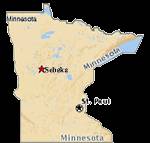
Plus, they tend to be very loyal employees. Where else are you going to work if you’re a C++ coder in Sebeka, Minnesota, especially if you’re addicted to hunting, fishing, and an easy commute?

Add to this the likelihood your coders will have at least a basic understanding of the business processes you’re dealing with, and noshoring is a winner.

And here’s the best part: These folks are Americans; they pay the same taxes we do; and if you need to fly out to see them, you don’t need shots.

It’s time to give our rural brethren a chance at saving your company money. And save a projected 540,000 US IT jobs by 2015.

NetworkWorld
Thanks to Alert SNS Reader Tim Plas for the pointer.

Briefly Noted

  • Shameless Self-Promotion Dept.: It’s here: A wireless networking company called The WiMAX Guys. Our main business is new installs for people who want to set up wireless hotspots such as hotels, warehouses, apartment buildings, and office buildings or hotzones that cover cities. We also sell a knowledge-based Web portal called the MAX K-Base. Check out our main Website at www.TheWiMAXGuys.com.

    My wife created a bit of a stir when her op-ed piece was published in the Minneapolis StarTribune newspaper after the election. Her article, “Two Nations, Handcuffed Together,” has been commented on or linked to by more than 85 Websites. She’s now created a Website to capitalize on her newfound pundit status. Check it out at www.debellsworth.com.

    Coming At Some Point: A new eBook, Be On the Wave Or Under It™ will collect the best of SNS’ insights over the last couple of years, along with additional material from CTOMentor white papers and new material. It will make a great gift for associates and friends in need of a guide to the latest and greatest technology. Watch for more information in upcoming SNS issues.

    Several issues ago I debuted SNS Begware, an opportunity for you, gentle reader, to express your appreciation by tipping your server via PayPal. See the sidebar for more info. Total in the kitty so far: $91.48. Thanks Dave!

  • The Raw File – SNS is dedicated to delivering the scoop on the latest and greatest. However, I collect lots of information that never makes it into the newsletter before it gets old. I’ve collected all this aging info into a page called The Raw File. This page is the raw information I gather for SNS articles. It’s not pretty, and some may be a little incoherent, but chances are there are still things in TRF that might be news to you. So therefore, use The Raw File at your own risk – it’s 45+ pages of the best stuff that didn’t make it into SNS.
    The Raw File
  • I’d Rather Be Lucky Than Good – Not long after I published the last SNS, a couple of new major data losses hit the news, including a massive security breach at Citigroup, owner of a lot of my credit card debt. It was a low-tech deal, however, with a cardboard box containing computer tapes with personal information on 3.9 million customers of its storefront consumer-finance unit being lost by UPS. The loss happened despite what the company termed “enhanced security procedures.” Makes you wonder what they lost that they haven’t told anybody about.

    And recently health giant Kaiser was fined $200,000 for posting patient information on its Website for four stinking years!
    Mercury News
    Wall Street Journal (requires subscription)

  • Privacy, Economics, and Price Discrimination on the Internet – Alert SNS Reader Prof. Andrew Odlyzko, director of the University of Minnesota’s Digital Research Center, sent along a link to his fascinating paper exploring the relationship between economics and privacy. Rather than being attacked by black hats with nefarious motives or clueless operatives, “Privacy appears to be declining largely in order to facilitate differential pricing, which offers greater social and economic gains than auctions or shopping agents.”

    Those of you who saw the Spielberg/Cruise movie Minority Report know what the professor is referring to: the ability for vendors to take information they know about you to tailor their offerings to you. It’s also the same process that enables vendors to tailor their pricing to you, just like the multi-tiered and imponderable airline pricing system.

    Prof. Odlyzko highlights the central paradox of all this privacy stuff. We may get outraged when Citigroup or ChoicePoint or Lexis/Nexus spill the beans on our private lives, but we don’t really want to do anything about it. “One of the many privacy puzzles is that even though the public shows intense concerns about loss of privacy, it is not doing much to protect itself. Privacy-protecting technologies have not fared well in the marketplace, and very minor rewards are enough to persuade people to sign up for grocery store loyalty programs. So are people being irrationally paranoid, or is there something else that the loss of privacy might bring, that they instinctively fear?” Read the paper for some ideas on the answers.
    Privacy Paper (PDF)

  • Geeks Are Doin' It For Themselves – Alert SNS Reader Roger Hamm must have too much time on his hands. He sent in a link to a fascinating site called GeekDIY. DIY stands for Do It Yourself, and geeks, being perhaps more solitary than the rest of us, naturally gravitate towards doing it themselves – everything building their own projection TVs to building an MP3 player out of an Altoids box and a traveling autonomous refrigerator robot.

    Roger comes by this fascination naturally. His brother is one of the originators of the world famous HellCycler.
    GeekDIY

Monday, June 06, 2005

The News – 06/06/05

You Have No Privacy. Get Over It!

Scott McNeely, CEO of Sun Microsystems, said this famous quote many years ago, well in advance of the recent privacy compromises from trusted institutions like ChoicePoint and Lexis/Nexus.

McNeely admits he was trying to be provocative, to get people thinking, but his real views on privacy – albeit from 2000, which is so pre-, well, everything – seem a bit naïve in the light of what’s gone on since.

At a speech in Australia during the Summer Olympics of 2000, McNeely attempted to clarify his statement.

You do not want total privacy. You want somebody to have your medical records if you get hit by a truck and [if] you cannot tell them the combination to your safe or where your medical records are kept, you have a problem. In effect you want your medical records to be available online out over the Internet. You want every ambulance driver to be able to unlock it.

So that is a little risk you take every ambulance driver might be able to tap into your medical records. Get over it. That is better getting hit by a truck and dying.

There are two reasons for needing privacy or wanting privacy. There are many reasons, [I] guess.

One is you are ashamed of what you are doing. You do not want anybody to know about it.

The second is maybe there [are] health reasons or whatever that you want to have privacy and you deserve some privacy for health condition when you are applying for insurance or whatever for fairness and equity reasons.

Privacy has never been absolute. If you want privacy do not tell anybody. Shop all the time with a mask and use cash and wear gloves. There is going to be a trade-off. Somebody knows your bank account. The government knows how much money you make. Your doctor and everybody in the health care community knows your medical condition. Your insurance company knows all this stuff. They actually force you to get a physical and then they read it. What is privacy? You know what—I kind of like people to know what I like. I do not like spam. With the new [golf shoe] spider spikes, I want to know about that. That is not spam to me. Unless people know I like to play golf they do not know that. I am not ashamed that I like golf.

Absolute privacy is a disaster as well as inappropriate dissemination of information. It is a very complicated topic. I think it is treated quite hysterically and superficially by a lot of people.

So McNeely’s argument (which seems a bit, er, jet-lagged) is a little more complicated than his zinger line, but it ignores a real threat to privacy that is not often discussed. It may be OK for MasterCard to know what I buy and my insurance company to know about my health and the highway department to know which toll booths I pass with my iPass electronic toll device, but the real threat is putting all that information together.

In isolation, all these little bits of privacy we give away don’t seem like a big deal. In fact, it seems that people’s first reaction when I talk about various invasions of privacy such as the Patriot Act is, “I’ve got nothing to fear. I’m not a terrorist or a criminal.” Yeah, today you’re not. But what if Congress passes a law prohibiting picking your nose? Or criticizing the president? You don’t think they’re capable of it? See the Terri Schiavo case.

The consolidation of private information is a grave threat to our freedom, as this little fantasy put together by the ACLU (who is either a source of information about why we should bomb Iraq, or not to be taken seriously, according to Donald Rumsfeld) demonstrates.

If you don’t have the Flash plug-in to view the piece, here’s a quick summary along with whether the plot point is reality or fantasy. Hapless Jim Kelly calls a pizza place and is immediately identified by his caller ID as calling from his cell phone (reality). The attendant confirms his national ID card number (fantasy at the moment, although his Social Security Number (SSN) would be almost as good today.)

He orders two double-meat pizzas but is informed there will be surcharge because his medical records indicate he has high blood pressure and cholesterol (fantasy; HIPAA prohibits this kind of sharing of information today) and because there was recently a robbery in his neighborhood, causing a surcharge for dangerous areas (reality.)

He argues a bit about the cost, but the attendant pulls up his purchase records and says since he just bought tickets to Hawaii, he obviously has cash (fantasy, although the Feds want to consolidate all travel information into a common database). She notes, however, from looking at his library card records, that he checked out a book on cheap travel (fantasy), although she doesn’t note another borrowed book, on depression. She checks his shopping records and finds out he has a 42-inch waist and recently bought a large box of condoms (fantasy).

Every piece of information in the ACLU scenario is legitimately shared by the poor pizza purchaser, even though some information he has no choice but to share. But consolidating it, linking it, and making it available to third parties – the business model of companies like ChoicePoint and Equifax – makes the information a much bigger threat to the overweight sap’s privacy, and his ability to act as he sees fit and buy that double-meat pizza.

The ACLU is obviously worried about the national identity card aspect of all of this. But, get over it, your SSN is just about as good as a national identity card, even though it is expressly prohibited to be used as such. And a national ID card is exactly what Congress approved in February, to no great fanfare. Why aren’t you worried about it? Because you have nothing to hide, like high cholesterol, waist size, what you purchase and where you go? What if that information fell into the hands of telemarketers or worse, spammers?

OK, let’s get real here. Go to ZabaSearch.com, type in your name, and see what comes up. If they don’t find you right away, try limiting the search by state. Notice how easily you can get a background check on yourself. Wonder what it would turn up?

Now of course, this information is probably in your local phone book. But now anyone can search thousands of phone books.

Not scared yet? Do a search for your phone number on Google. If you’re lucky, like me, you’ll see a link like:

Phonebook results for 952-555-5555 Deborah Ellsworth, (952) 555-5555, 8273 Westwood Hills Curv, Minneapolis, MN 55426 Google Maps Yahoo! Maps MapQuest Michael Ellsworth, (952) 555-5555, 8273 Westwood Hills Curv, Minneapolis, MN 55426 Google Maps Yahoo! Maps MapQuest

Why did I change the phone number in this example despite the fact I’m in the book? Because I’m not an idiot, that’s why. But check out the maps. You can find out where I live. I’ve got nothing to hide, and no enemies who harbor evil intent that I know about, but I’m not that comfortable with everyone in the world knowing where I live, even though that’s in the phone book, too. You see, I write an online newsletter and might just offend someone who might want to look me up.

Remember, folks, the right to privacy is not mentioned or guaranteed in the US Constitution, so you’re on your own. Also remember that nothing electronic is every entirely secure. And although you might think of this as a lefty concern, privacy is not a partisan issue. We all value it, and we all could lose it unless we speak up.

News.com Thanks to Alert SNS Reader Doug Laney for the pointer to the ACLU piece.

Briefly Noted

  • Shameless Self-Promotion Dept.: It’s here: A wireless networking company called The WiMAX Guys. Our main business is new installs for people who want to set up wireless hotspots such as hotels, warehouses, apartment buildings, and office buildings or hotzones that cover cities. We also sell a knowledge-based Web portal called the MAX K-Base. Check out our main Website at www.TheWiMAXGuys.com. My wife created a bit of a stir when her op-ed piece was published in the Minneapolis StarTribune newspaper after the election. Her article, “Two Nations, Handcuffed Together,” has been commented on or linked to by more than 85 Websites. She’s now created a Website to capitalize on her newfound pundit status. Check it out at www.debellsworth.com. Coming At Some Point: A new eBook, Be On the Wave Or Under It™ will collect the best of SNS’ insights over the last couple of years, along with additional material from CTOMentor white papers and new material. It will make a great gift for associates and friends in need of a guide to the latest and greatest technology. Watch for more information in upcoming SNS issues. Several issues ago I debuted SNS Begware, an opportunity for you, gentle reader, to express your appreciation by tipping your server via PayPal. See the sidebar for more info. Total in the kitty so far: $91.48. Thanks Dave!
  • The Raw File: SNS is dedicated to delivering the scoop on the latest and greatest. However, I collect lots of information that never makes it into the newsletter before it gets old. I’ve collected all this aging info into a page called The Raw File. This page is the raw information I gather for SNS articles. It’s not pretty, and some may be a little incoherent, but chances are there are still things in TRF that might be news to you. So therefore, use The Raw File at your own risk – it’s 45+ pages of the best stuff that didn’t make it into SNS. The Raw File
  • Cat Update: Well, none of you heartless freeloaders took seriously my threat in the last SNS to kill my cat. I got no money contributed to the Save My Cat Fund (see the sidebar if you've been guilted into contributing now.) So, to prove to you I’m serious, here’s a picture of my cat in peril, along with a detailed description of what I will do if you push me to it. Plus, I’ve got other pets, too . . . Don't Make Me Do It! Thanks to Alert SNS Reader Bill Lehnertz of TLC Financial for the pointer.
  • Nanotech Applications: According to Aggregate Research, the top 10 nanotechnology applications are:
    1. Energy storage, production and conversion;
    2. Agricultural productivity enhancement;
    3. Water treatment and remediation;
    4. Disease diagnosis and screening;
    5. Drug delivery systems;
    6. Food processing and storage;
    7. Air pollution and remediation;
    8. Construction;
    9. Health monitoring;
    10. Vector and pest detection and control.

Thanks to Alert SNS Reader Bill Lehnertz of TLC Financial for the pointer.